Forex Trading Tips: 12 Essential Rules for Successful Trading
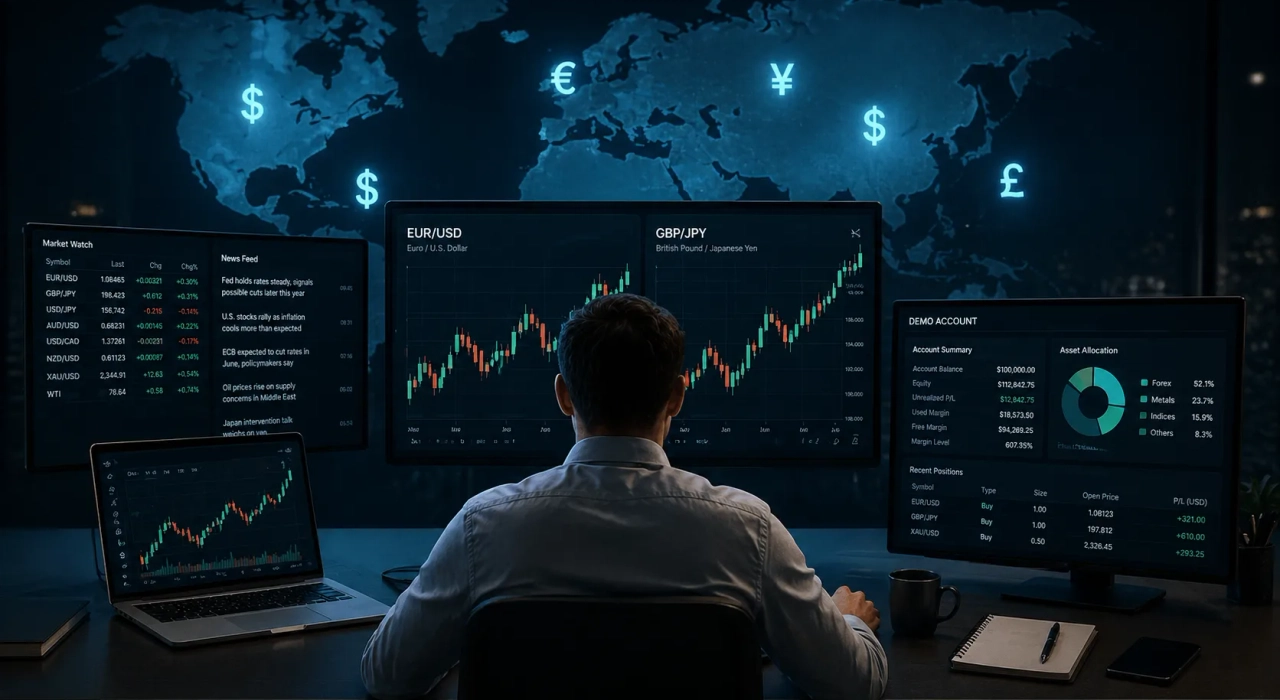
Trading forex can be a rewarding pursuit, but it is not a walk in the park. These forex trading tips will help you build a solid foundation, whether you are placing your first trade or looking to sharpen your approach. The forex market is the largest financial market in the world, with average daily turnover of about $9.6 trillion in April 2025, according to the Bank for International Settlements.
Success in forex trading comes down to three things: understanding how the market works, following a clear plan, and managing risk on every single trade. It is about making informed decisions, not random bets. Use the table below as a quick checklist, then read each tip in detail.
The 12 Forex Trading Tips at a Glance
| # | Tip | What to do |
|---|---|---|
| 1 | Set realistic goals | Aim for measurable, achievable milestones instead of quick riches |
| 2 | Write a trading plan | Define your strategy, risk limits and exit rules before you trade |
| 3 | Choose and backtest a strategy | Test it on historical data and review it regularly |
| 4 | Pick a reliable platform | Look for stability, fast execution, order types and charting tools |
| 5 | Risk a small percentage per trade | Size every position from your stop-loss distance and account risk |
| 6 | Use stop-loss and take-profit levels | Set both before you enter and respect them |
| 7 | Use leverage carefully | Start low and remember that leverage magnifies losses as well as gains |
| 8 | Diversify and watch correlations | Avoid stacking trades that move in the same direction |
| 9 | Practice on a demo account | Test ideas without risking real money |
| 10 | Combine technical and fundamental analysis | Use charts for timing and economic data for direction |
| 11 | Keep learning and stay informed | Follow reliable news and review your results |
| 12 | Control your emotions | Follow your plan and keep a trading journal |
Understand the Forex Market First
How the Forex Market Works
The forex market operates 24 hours a day, five days a week. It is accessible to anyone with an internet connection and capital. It is also decentralized, which means there is no central exchange: transactions happen over the counter through a network of banks and brokers.
Forex is the largest financial market globally, and it plays a central role in international trade and finance. Its size brings real advantages: high liquidity, quick trade execution and tight spreads. It also offers access to a broad range of currency pairs, opportunities for both short-term and long-term trading, and the ability to trade with leverage. At the same time, the market reacts to economic indicators and geopolitical events, so volatility is part of the game.
Whether you are a novice or an experienced trader, understanding these mechanics lays the foundation for strategic planning and informed decision-making.
Currency Pairs Explained
Currency pairs lie at the heart of forex trading. A pair represents the exchange rate between two currencies, and every forex trade involves buying one currency and selling another.
Major pairs, such as EUR/USD, involve the most traded currencies in the world. They are known for lower spreads and higher liquidity. Minor and exotic pairs involve less traded currencies, which usually means more volatility and more risk. To trade effectively, get to know a handful of key pairs, recognize how they behave and learn which factors move them.
Plan Your Trading Before You Place a Trade
Tip 1: Set Realistic Goals
Clear goals give you direction and help you measure progress. In forex trading, realistic goals match your skill level and risk tolerance. Rather than chasing quick riches, focus on steady growth and skill development.
Short-term goals, such as improving your trade analysis, lead to long-term success when they are specific and measurable. Achieving them builds confidence and reinforces good habits. This approach keeps your trading journey sustainable and reduces the risk of burnout.
Tip 2: Write a Trading Plan
A trading plan is your roadmap. It should include your strategy, your risk management rules and your exit plans. Writing it down forces you to think through each decision when you are calm, not in the middle of a volatile market.
Following a plan prevents impulsive decisions driven by market emotions. It also creates routine and discipline. Over time, a good plan evolves with your experience and with changing market conditions.
Tip 3: Choose and Backtest a Strategy
An effective strategy is based on research and tailored to your trading style. Techniques can include technical analysis, fundamental analysis or a blend of both. If you want a step-by-step look at the most popular approaches, read our guide to forex trading strategies.
Backtesting your strategy on historical data helps you refine it. It shows how the strategy would have behaved and lets you make adjustments before risking real money. Keep reviewing and adapting it so it stays relevant as markets change.
Choose the Right Forex Trading Platform
Tip 4: Pick a Reliable Platform With the Right Tools
The right platform can significantly improve your trading experience. When comparing forex trading platforms, such as MetaTrader 4, MetaTrader 5 and cTrader, consider user interface, reliability and the tools available. Platform stability matters because you need to execute trades without technical issues.
Look for these key features:
- Real-time market data, so you always trade with up-to-date prices.
- Multiple order types, including market, limit and stop-loss orders, for flexibility and risk control.
- Advanced charting tools and customizable indicators to help you spot patterns and trends.
- Mobile trading support, so you can manage positions on the go.
What Day Traders Should Look For
Forex day trading platforms must cater to specific needs. High-speed execution and low latency help you capture the price you want. Fees matter more for active traders, who may execute many trades a day, so compare spreads and commissions carefully. Robust analytical tools and real-time news feeds also help you make informed decisions quickly.
Forex Risk Management and Leverage
Effective risk management is the backbone of successful forex trading. The goal is to protect your capital from large losses by setting limits on every trade.
Tip 5: Risk a Small Percentage on Every Trade
A common rule of thumb is to risk only a small percentage of your account, often 1% to 2%, on a single trade. Consistent lot sizing prevents any one trade from disproportionately affecting your portfolio.
Here is a simplified illustration. With a $5,000 account and a 1% risk rule, you risk $50 per trade. If your stop-loss is 25 pips away on EUR/USD, and one pip is worth about $10 per standard lot, a position of 0.2 lots keeps your loss near $50 if the stop is hit (25 pips x $2 per pip). Actual pip values vary by pair and account currency. The lot size calculator in the Tradeview calculator suite can do this math for you from your account balance, risk percentage and stop-loss distance.
Tip 6: Always Use Stop-Loss and Take-Profit Levels
A stop-loss order automatically closes a losing trade and limits your potential loss. A take-profit level closes a winning trade at your target. Setting both before you enter takes emotions out of the decision and helps you secure gains or reduce losses.
Also consider your risk-to-reward ratio. If you risk 25 pips to target 50 pips, the ratio is 1:2. With that ratio, you would need to win only a little more than one in three trades to break even before costs. Determine your risk tolerance before trading, and define your exit points before you enter.
Tip 7: Use Leverage Carefully
Leverage lets you control larger positions with a smaller amount of capital. It is a double-edged sword: it can boost potential gains, but it also increases the risk of significant losses. A common leverage ratio in forex trading is 50:1, which means you can control $50 for every $1 in your account (a margin requirement of 2%).
As a beginner, start with lower leverage to manage risk effectively. As your experience and confidence grow, you may cautiously increase it. Always align your leverage with your risk tolerance and your trading strategy, and never use high leverage unless you fully understand what it can do to your account.
Tip 8: Diversify and Watch Currency Correlations
Diversification means spreading your exposure across different currency pairs, so a single position cannot damage your whole portfolio. But diversification only works if you understand currency correlation. Some pairs often move in the same direction, while others react in opposite ways to the same event. Opening several trades on highly correlated pairs can mean you are taking the same bet more than once.
Combining diversification with an awareness of correlations helps protect you from unexpected market movements and lets you balance risk and reward across your trading portfolio.
Education, Practice and Market Analysis
Tip 9: Practice on a Demo Account
Demo accounts are invaluable for building skills without financial risk. They simulate real market conditions, so you can test strategies, try different approaches and adjust them based on the results. This practice is especially useful for beginners who are still learning how the market behaves, and it builds confidence before you make real trades.
Tip 10: Combine Technical and Fundamental Analysis
Technical analysis and fundamental analysis are the two pillars of forex market analysis. Technical analysis focuses on chart patterns and price trends, and uses historical data to forecast future price movements. Fundamental analysis looks at economic indicators and geopolitical events, such as interest rates, employment data and GDP reports, to anticipate longer-term market direction.
A balanced approach that combines both often gives you a fuller picture: charts help with timing, and economic data helps with direction.
Tip 11: Keep Learning and Stay Informed
Forex markets shift quickly under the influence of global events and economic data, so continuous learning is essential. Education can include online courses, webinars and trading forums. Follow reliable financial news outlets and analysis platforms for real-time data and expert insights, and engage with the trading community to gain fresh perspectives.
Trading Psychology and Discipline
Tip 12: Control Your Emotions and Stay Disciplined
Success in forex trading relies heavily on mindset. Fear can push you to close positions too early, while greed can lead you to hold losing trades longer than planned. Recognizing these emotions is the first step toward controlling them. Practicing stress management, such as deep breathing or mindfulness, can help you stay clear-headed during market turbulence.
Discipline means entering and exiting trades based on your plan, not on market noise. Strict rules for managing trades, such as fixed stop-loss orders and profit targets, keep your decisions structured. Patience matters too: waiting for the right conditions helps you avoid hasty trades that lead to losses.
Keep a Trading Journal
A trading journal is one of the simplest ways to improve. Record the pair, the reason for entering, your stop-loss and target, the result and how you felt. Reviewing your entries regularly reveals patterns in your behavior, shows which setups work for you and helps you fix repeated mistakes.
Advanced Forex Trading Strategies to Explore Later
Advanced strategies can elevate your performance as you gain experience. Technical indicators such as moving averages and Fibonacci retracements can help you make more informed predictions about price movements. Algorithmic trading uses computer programs to place trades based on predefined criteria. It reduces emotional involvement and speeds up execution, but it requires programming knowledge and thorough backtesting.
You can also combine short-term and long-term approaches: capture immediate market fluctuations while positioning for longer-term gains. This diversified approach helps reduce the risks of sudden market shifts.
Common Forex Trading Mistakes and How to Avoid Them
Trading forex is challenging, and even seasoned traders make mistakes. The key is to learn from the errors of others instead of repeating them. Three of the most common are trading on emotion, failing to adapt your strategy as markets change and ignoring risk management.
Overtrading and Lack of Patience
Overtrading drains your resources and is often driven by impatience. New traders especially fall into this trap while seeking quick profits, which increases risk without guaranteeing returns. Be selective: wait for market conditions to align with your strategy instead of reacting impulsively.
Ignoring Costs and Exit Plans
Skipping market research or technical analysis leads to uninformed trades. Trading costs, such as spreads and commissions, reduce profitability, so factor them into your plan. And without a clear exit strategy, small losses can grow. Define your exit points before you enter each trade to limit losses and secure profits when conditions change.
Forex Trading Tips for Beginners: Frequently Asked Questions
What are the most important forex trading tips for beginners?
Start with the basics: learn how currency pairs work, write a trading plan, practice on a demo account, risk only a small percentage of your account on each trade, use stop-loss orders and keep leverage low. Then build the habit of reviewing your trades in a journal.
How much should I risk per trade?
There is no single right answer, but a common rule of thumb is to risk 1% to 2% of your account on a single trade. Your own risk tolerance, strategy and account size should guide the final decision.
Can beginners make money trading forex?
Trading forex carries a high level of risk, and most retail traders lose money. According to the CFTC customer advisory on forex trading, about one-third of customers at registered OTC forex dealers made a profit over the period it reviewed, while two-thirds lost money. Education, a written plan and strict risk management improve your chances but never guarantee results.
How does leverage affect my risk?
Leverage amplifies both gains and losses. At 50:1, a 2% move against your position can wipe out the margin you used for that trade. Start with lower leverage, use stop-loss orders and size your positions carefully.
Is a demo account worth using?
Yes. A demo account lets you test strategies and get familiar with a platform under real market conditions without risking capital. Many traders keep using one to test new ideas before applying them to a live account.
Conclusion: Stay Committed to Improvement
Success in forex trading comes from constant learning and adapting. Mastering these forex trading tips takes dedication and a willingness to evolve, and every trading session offers lessons for those who pay attention. Consistency in your habits and strategies builds confidence and resilience over time.
The forex market will keep evolving, so staying prepared for new trends and adapting to change is part of the journey. Remember: in forex, progress is a journey, not a destination. Put these tips into practice with a demo account first, and keep risk management at the center of every trade.
Trading foreign exchange and CFDs carries a high level of risk and may not be suitable for all investors. This article is for educational purposes only and does not constitute investment advice.
Community
Trading platforms
Services
Articles
Community
Trading platforms
Services


Copyright © 2026. All rights reserved.
There is a risk of loss in trading foreign currencies and it is not suitable for everyone. Tradeview is not responsible for any gains or losses on currency rates or exchanges during any transaction.
The services and products offered by Tradeview are not being offered within the United States (US) and not being offered to US Persons, as defined under US law. The information on this website is not directed to residents of any country where FX and/or CFDs trading is restricted or prohibited by local laws or regulations.
CFDs are complex instruments and come with a high risk of losing money rapidly due to leverage. 64% of retail investors' accounts lose money when trading CFDs with Tradeview. You should consider whether you understand how CFDs work and whether you can afford to take the high risk of losing your money.
Headquarters Tradeview Ltd.: 13 Genesis Close, 4th Floor, Suite 422, Cayman Islands
High Risk Warning: Foreign exchange trading carries a high level of risk that may not be suitable for all investors. Leverage creates additional risk and loss exposure. Before you decide to trade foreign exchange, carefully consider your investment objectives, experience level, and risk tolerance. You could lose some or all your initial investment; do not invest money that you cannot afford to lose. Educate yourself on the risks associated with foreign exchange trading and seek advice from an independent financial or tax advisor if you have any questions.
Advisory Warning: Tradeview provides references and links to selected blogs and other sources of economic and market information as an educational service to its clients and prospects and does not endorse the opinions or recommendations of the blogs or other sources of information. Clients and prospects are advised to carefully consider the opinions and analysis offered in the blogs or other information sources in the context of the client or prospect's individual analysis and decision making. None of the blogs or other sources of information is to be considered as constituting a track record. Past performance is no guarantee of future results and Tradeview specifically advises clients and prospects to carefully review all claims and representations made by advisors, bloggers, money managers and system vendors before investing any funds or opening an account with any Forex dealer. Any news, opinions, research, data, or other information contained within this website is provided as general market commentary and does not constitute investment or trading advice. Tradeview expressly disclaims any liability for any lost principal or profits without limitation which may arise directly or indirectly from the use of or reliance on such information. As with all such advisory services, past results are never a guarantee of future results.